
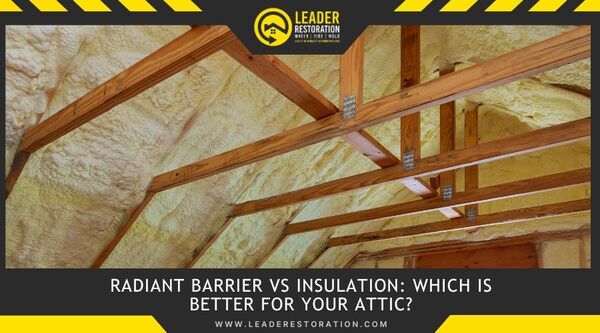
Your attic can reach sweltering temperatures of 140°F or higher even on mild summer days, making your AC work harder. While many homeowners debate choosing between a radiant barrier and insulation, the most effective strategy for hot climates is to use both products together. Insulation maintains the desired temperature, while the barrier blocks the unwanted heat, making them a powerful team for energy efficiency.
- What Is the Difference Between Radiant Barrier and Insulation?
- How Heat Enters Your Attic?
- How Traditional Attic Insulation Controls Heat?
- How Radiant Barriers Reflect Heat in Attics?
- Do You Need a Radiant Barrier If You Have Insulation?
- Which Upgrade Does Your Attic Need?
- Choose the Best Defense Against Attic Heat
- Frequently Asked Questions
- What is the difference between a radiant barrier and insulation?
- Do I need a radiant barrier if I have enough insulation?
- How much does a radiant barrier save on cooling?
- Can you install a radiant barrier over existing insulation?
- Is a radiant barrier worth it?

What Is the Difference Between Radiant Barrier and Insulation?
The main difference is that insulation handles conduction, while radiant barriers handle radiation. Insulation relies on density and thickness to resist heat flow, while a radiant barrier relies on a reflective surface to turn heat away. Density also helps insulation dampen noise, which a thin foil barrier can't do, and that sound control is what insulation STC ratings measure.
Use this table to compare how each material functions:
| Feature | Traditional Insulation | Radiant Barrier |
| Primary Function | Slows heat transfer (Conduction) | Reflects heat (Radiation) |
| Best Climate | All climates (keep heat in/out) | Hot/Sunny climates (keep heat out) |
| Measurement | R-Value (Resistance) | Reflectivity % |
| Material | Fiberglass, Cellulose, Foam | Aluminum/Reflective Foil |
| Material Cost | Higher Material Cost | Lower material cost (installation varies) |
| Installation Difficulty | Hard (messy, requires equipment) | Moderate (stapling foil) |
How Heat Enters Your Attic?
To understand why you might need attic foil insulation, you must understand the physics of heat transfer. Here are the two ways heat transfers into your home:
- Conduction: This is heat moving through solid materials. In your attic, the sun heats your roof shingles, which transfer that heat into the wood roof deck, and finally down into the insulation below.
- Radiation: This is heat traveling as invisible energy waves, known as thermal radiation. This is the same type of energy you feel radiating from a fire or the sun.
This distinction is critical because standard insulation is designed to stop conduction. It is not designed to stop radiation. This is why a thick layer of insulation can still get hot during extreme summer heat because it absorbs radiant energy rather than blocking it.
How Traditional Attic Insulation Controls Heat?
Traditional insulation works by trapping air bubbles to resist heat flow, a process known as resistive flow. The effectiveness of this material is measured by R-Value; a higher number means the material has better resistance against heat transfer.
However, insulation has a physical limitation. As attic temperatures rise during extreme summer heat, insulation becomes less effective at slowing heat flow. The hotter the roof deck and attic air become, the more heat moves through the insulation and into your living space. In extreme temperatures, even high-quality traditional attic insulation solutions eventually get overwhelmed.
How Radiant Barriers Reflect Heat in Attics?
So, do radiant barriers help reduce excessive attic heat? Yes. Instead of absorbing heat, this material reflects it. These barriers have low emissivity, meaning they emit very little heat through to the other side.
By installing a foil heat shield on your rafters, you block roughly 97% of the radiant heat hitting your roof. This stops the heat before it hits your insulation. Because the barrier provides heat reflection at the source, your insulation stays cooler and works more effectively. Rafters hidden behind drywall in a converted bonus room can't take foil this way, so insulating a finished attic relies on filling the closed cavities instead.
Do You Need a Radiant Barrier If You Have Insulation?
When weighing radiant barrier vs insulation, you should consider your specific environment and home layout. Here are the situations where adding a barrier makes the most sense:
- Hot Climates (Yes): If you live in a region with long and hot summers, insulation alone is often not enough to handle the heat load.
- Cold Climates (Optional): If your main concern is staying warm in winter, insulation is the priority because barriers have less impact on retaining heat.
- Ductwork in Attic: If your AC ducts run through the attic, a radiant barrier is highly recommended to stop the ducts from gaining heat.
You must also ensure you have proper attic ventilation to help move the hot air out of the space effectively.
Which Upgrade Does Your Attic Need?
Deciding where to spend your money depends on the current state of your attic insulation. Here's a simple way to decide if a radiant barrier is worth the investment:
- Choose Insulation First If: Your current insulation is old, thin, or damaged, you must stop the conductive heat flow first.
- Choose Radiant Barrier If: You already have good insulation, but your house is still uncomfortably hot in the summer.
- Choose Both If: You are building a new home or live in a very hot climate where you need maximum protection against solar heat gain.
Understanding how insulation handles summer heat will help you realize why relying on just one method is often insufficient.
Choose the Best Defense Against Attic Heat
You do not have to choose between them because using insulation to hold the temperature and a radiant barrier to block the sun is the best approach. Insulation acts like a heavy blanket to hold your temperature, and the radiant barrier acts like a shade to block the sun. If your air conditioner runs constantly, Leader Restoration can inspect your attic to see if adding a barrier is the right choice for your home.

Frequently Asked Questions
What is the difference between a radiant barrier and insulation?
Insulation slows conductive heat flow like a sponge, while a radiant barrier reflects radiant heat like a mirror. When comparing R-value vs reflectivity, barriers have almost no R-value but very high reflectivity.
Do I need a radiant barrier if I have enough insulation?
In hot climates, yes. Even thick insulation becomes less effective as attic temperatures rise. A radiant barrier reduces the radiant heat load before it reaches the insulation, helping it perform better.
How much does a radiant barrier save on cooling?
Savings vary by climate, but generally, it can reduce cooling costs significantly in sunny regions. Using an attic fan can assist, but the barrier is the primary defense against solar gain.
Can you install a radiant barrier over existing insulation?
Yes, but it must be installed on the rafters or with an air gap. Never lay it directly on top of floor insulation where dust can ruin its reflectivity.
Is a radiant barrier worth it?
For homes with attic ductwork or those in hot climates, the improved comfort and energy savings typically justify the cost.
Leader Restoration
303 Twin Dolphin Dr , 6th floor Redwood City, CA 94065


